
/gateway path. The browser uses a same-origin /gateway/api/* facade while
the private gateway Admin API remains /admin/* behind the deployment edge.
Self-managed installations may keep the bundled /admin/ui default. The
console manages concrete models, aliases, and application API keys and shows
usage, cost, budgets, alerts, and reservation state. The same workflows remain
available through the Admin API for automation.
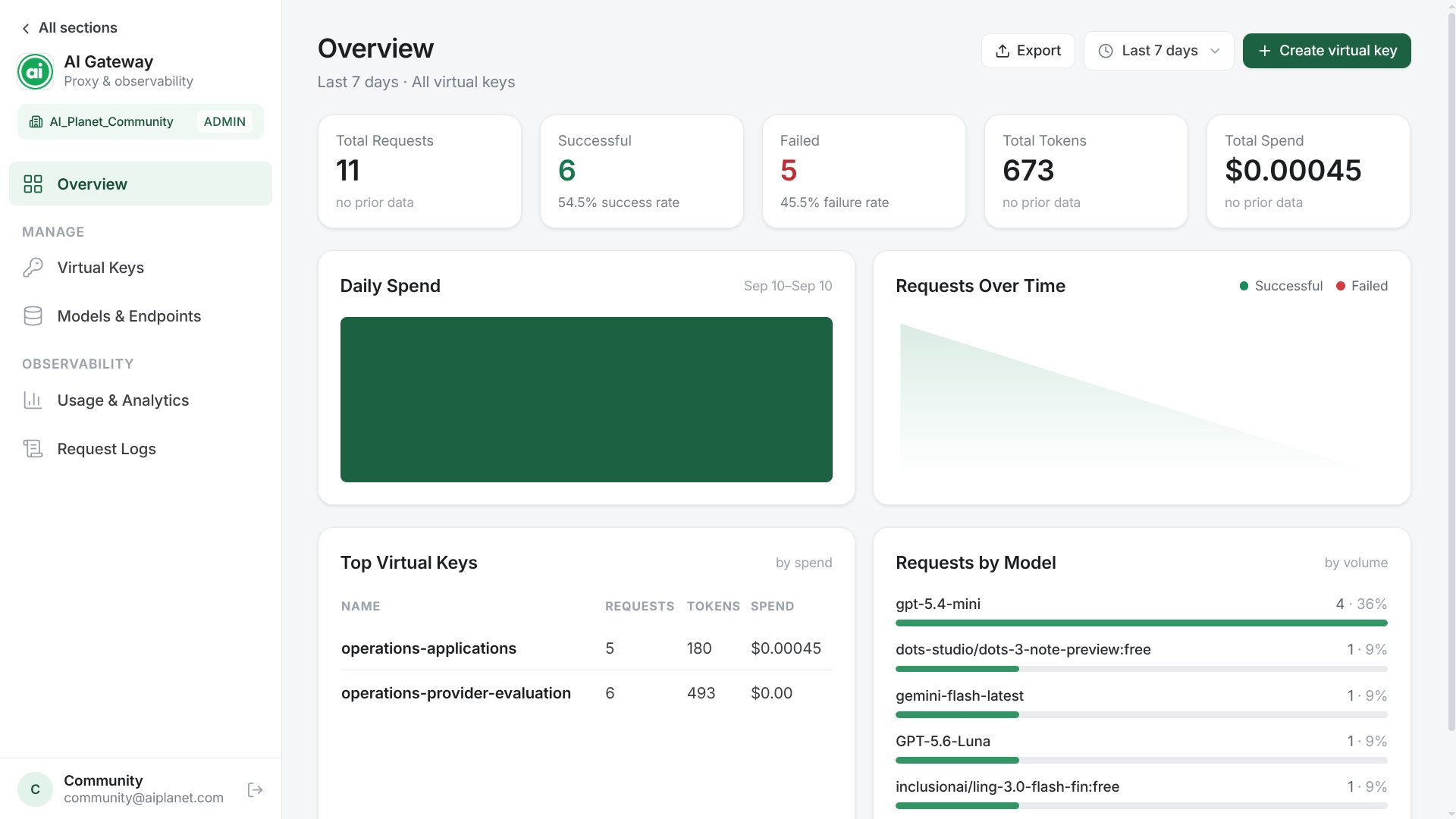
The gateway console overview: request, token, and spend totals for the selected period, daily spend, request volume, top virtual keys, and requests by model.
/operator/login route. Successful login
creates an opaque session in an HttpOnly, SameSite=Strict cookie scoped to
the console path; the browser never stores an admin API key. Keep the raw Admin
API on a private operator origin.
The first administrator is bootstrapped from a password environment variable during deployment. System admins can create and disable system_admin, system_operator, org_admin, org_operator, and org_viewer users under API Keys → Administrators. Organization roles require one organization scope; the API forces all tenant data and key mutations into that scope. System operators manage global gateway resources but not identities. Legacy admin, operator, and viewer records continue to work as aliases.
Create an API key
Flow: API Keys → Create key → choose aliases and endpoints → set limits and budget → Create. The console displays the raw token exactly once. Put it in the application’s secret manager before closing the result dialog.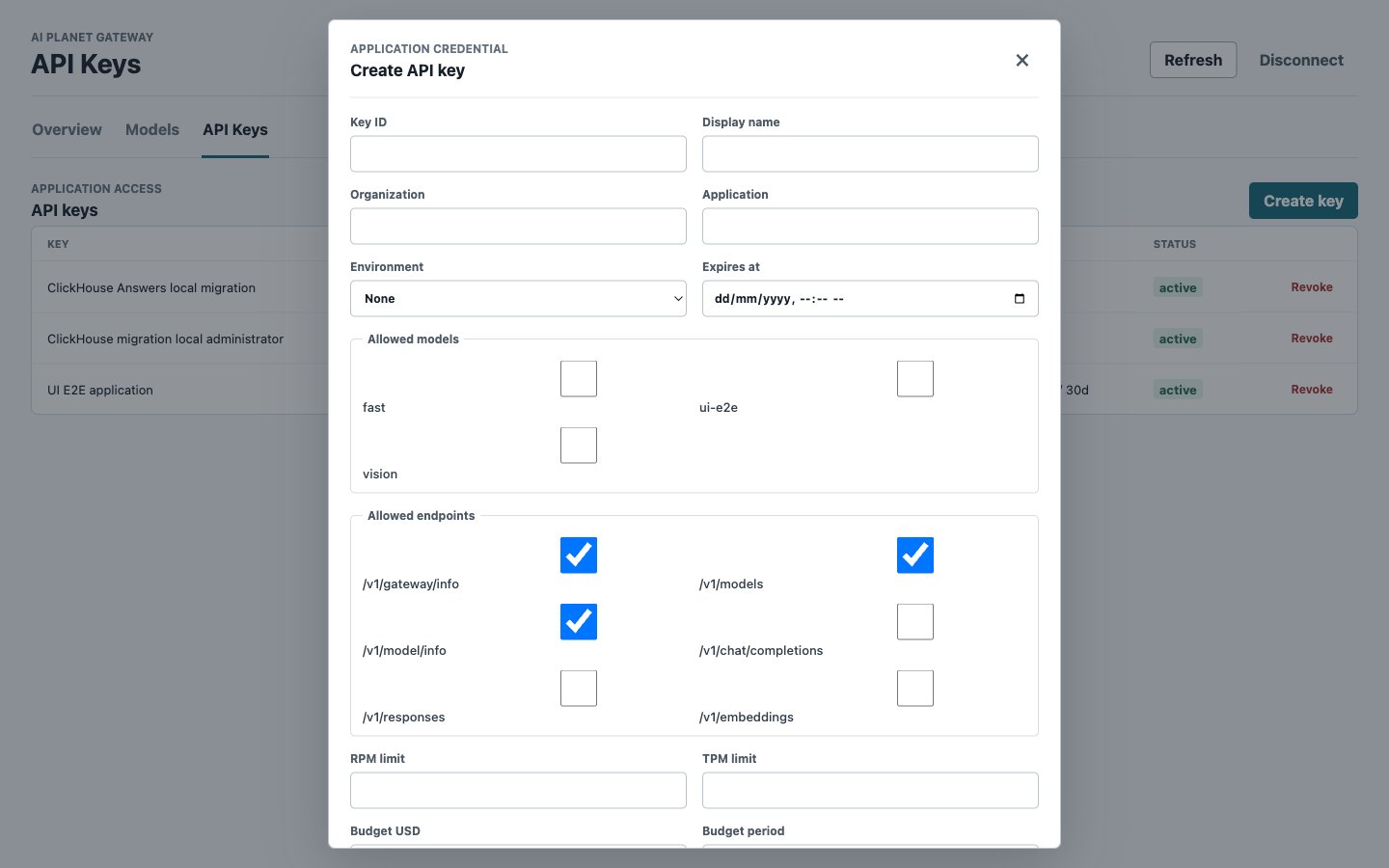
Create an application API key with model, endpoint, RPM, TPM, expiry, and budget scopes
Inspect an API key
Flow: API Keys → Details. The read-only detail view shows tenant, application, environment, model and endpoint scopes, RPM/TPM, budget, expiry, rotation-overlap deadline, status, and whether the key is owned by deployment configuration or the database. Organization-scoped users can inspect only keys returned for their organization. Raw tokens and token hashes are never available in this view. Use the List keys API to retrieve the same safe metadata for automation.Edit an API key
Flow: API Keys → Edit → change policy → Save changes. The key ID, tenant/application identity, environment, role, and token remain unchanged. You can edit its display name, model and endpoint scopes, RPM/TPM limits, expiry, and budget. The same raw token continues to work under the new policy, and no token is displayed or returned. For budget changes, the dialog states that the new limit applies immediately to the current period and shows spent, reserved, committed, and available-after-save amounts on one line. A changed reset interval appears separately because it starts with the next period and does not reset current usage or move the current period deadline. Lowering the limit below spent plus reserved usage adds a separate warning, requires confirmation, and causes new requests to fail until capacity is available; existing reservations can still settle. Budget enforcement cannot currently be removed through an edit. See Update a key for the API contract and deployment-owned key behavior.Review usage
Flow: Overview → select time range → filter application, environment, model, or provider.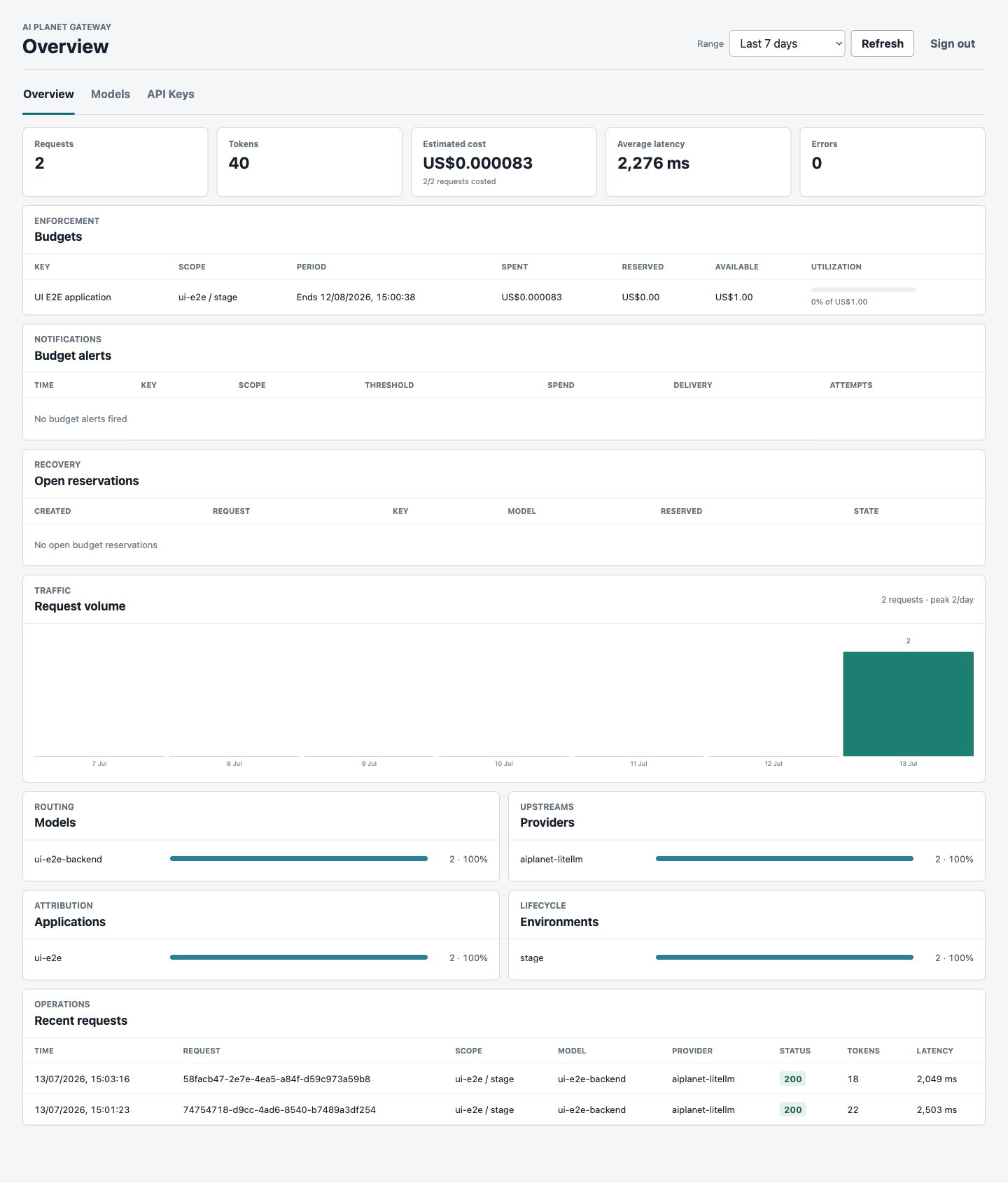
Gateway request, token, cost, latency, error, and attribution overview
Set and monitor a budget
Set the budget and duration while creating a key. The Overview shows spent, reserved, available, utilization, reset, alert delivery, and reservation state.
Per-key budget utilization, remaining balance, reset, alerts, and reservations
Configure models
Flow: Models → Add model → review provider mapping, capabilities, and pricing → Add alias → select one or more weighted targets.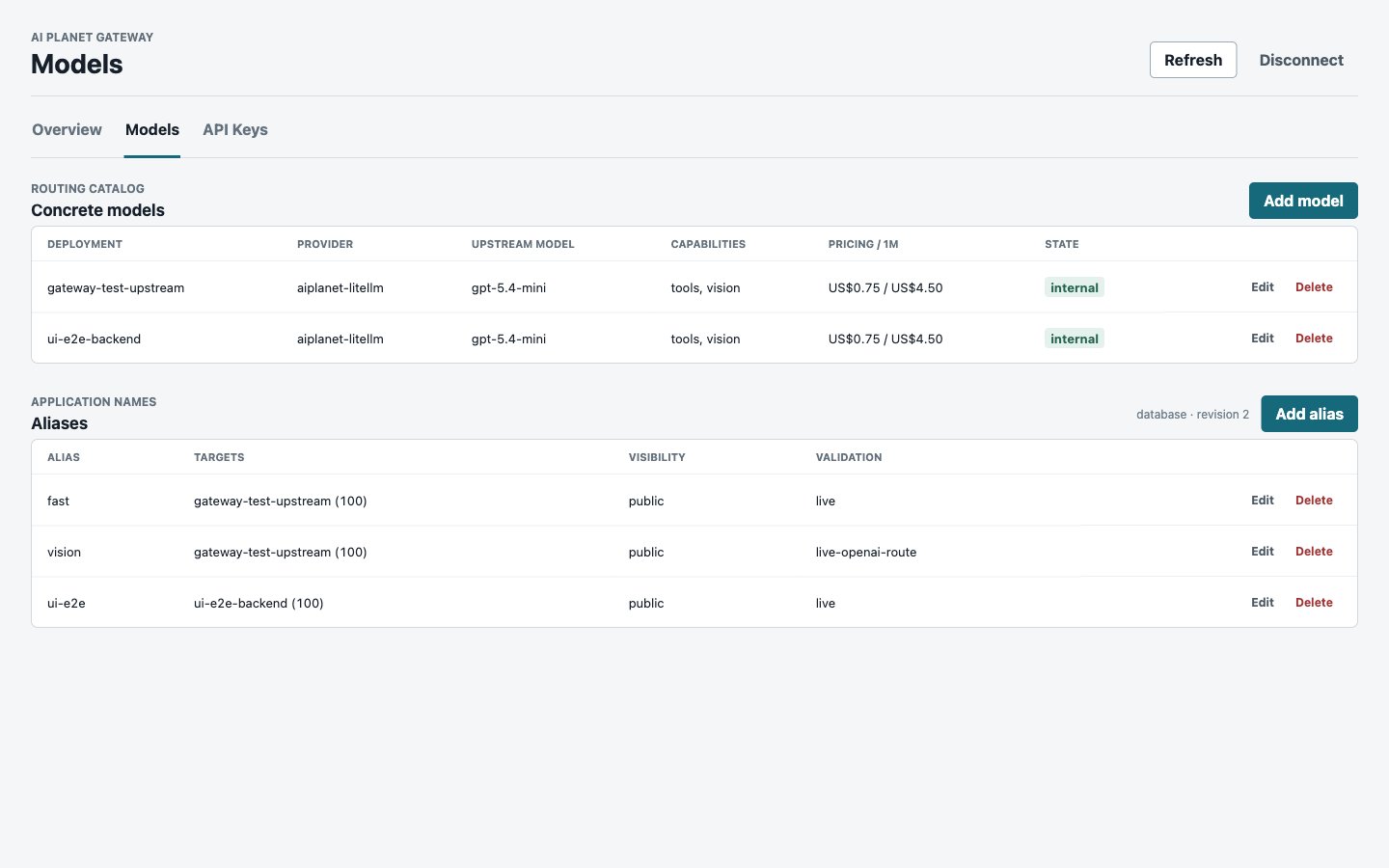
Concrete provider models and stable weighted application aliases